
🎵 Audio guide
Located in the far north-west of the Monfragüe Biosphere Reserve, Mirabel lies at the foot of the Sierra de losCanchos. Under the watchful gaze of its castle, its natural surroundings form a mosaic of colours. Its geography gives Mirabel a unique charm, with its exemplary natural environment, its birds, wildlife and livestock, and it also has a rich history, architectural and ethnographic heritage and is one of the gateways to the Monfragüe national park.

These lands have been inhabited since ancient times and are dotted with traces of their former occupants. They were once part of the disputed border between the Moors and the Christians. Around the year 1196, Fernando VII assigned Mirabel to the City of Plasencia and later, in 1488 the Catholic Monarchs conceded the stronghold and subjects to the House of Zúñiga.
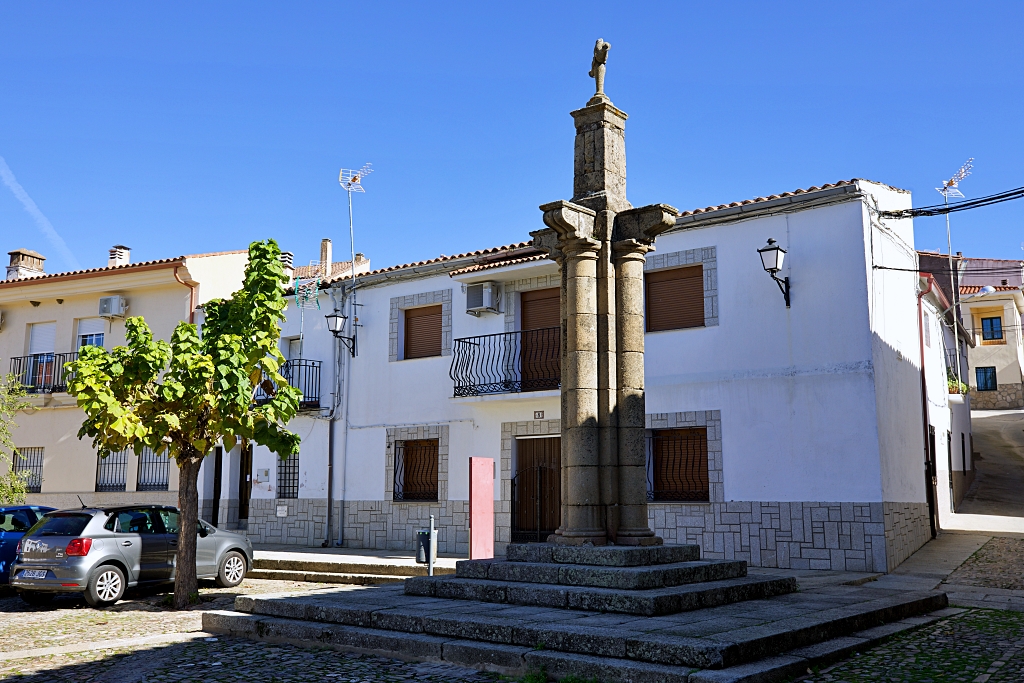
In 1535, Carlos V created the title Marquess of Mirabel and bestowed control over the territory to this new noble lineage. This signified legal and political independence from Plasencia and a pillory was constructed as a symbol of this independence. The Marquess retained some element of powers until the beginning of the 20th century.
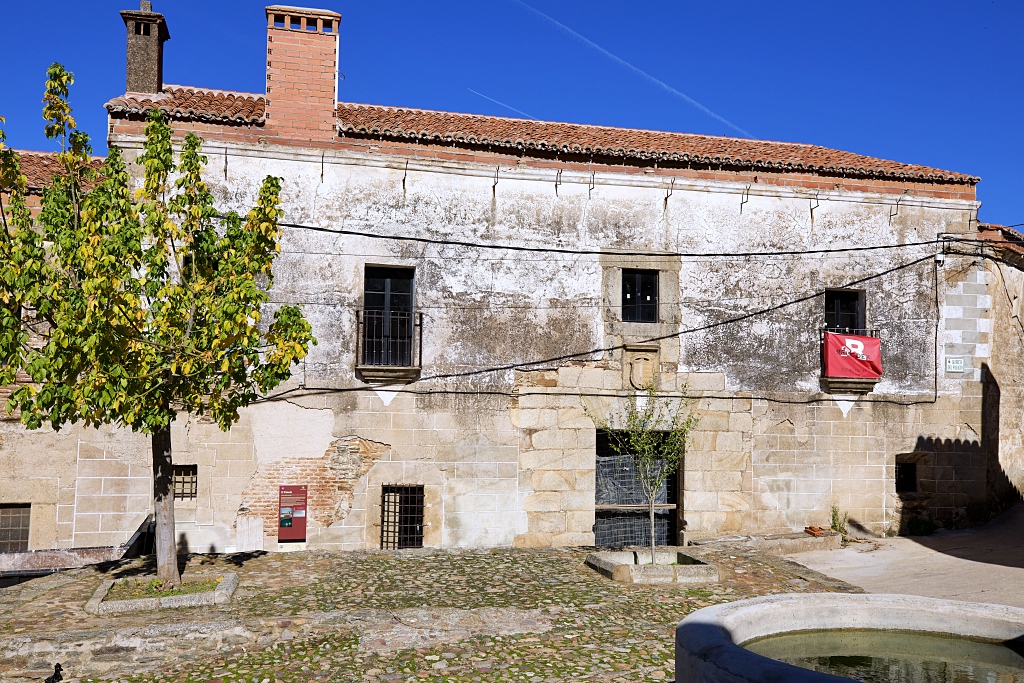
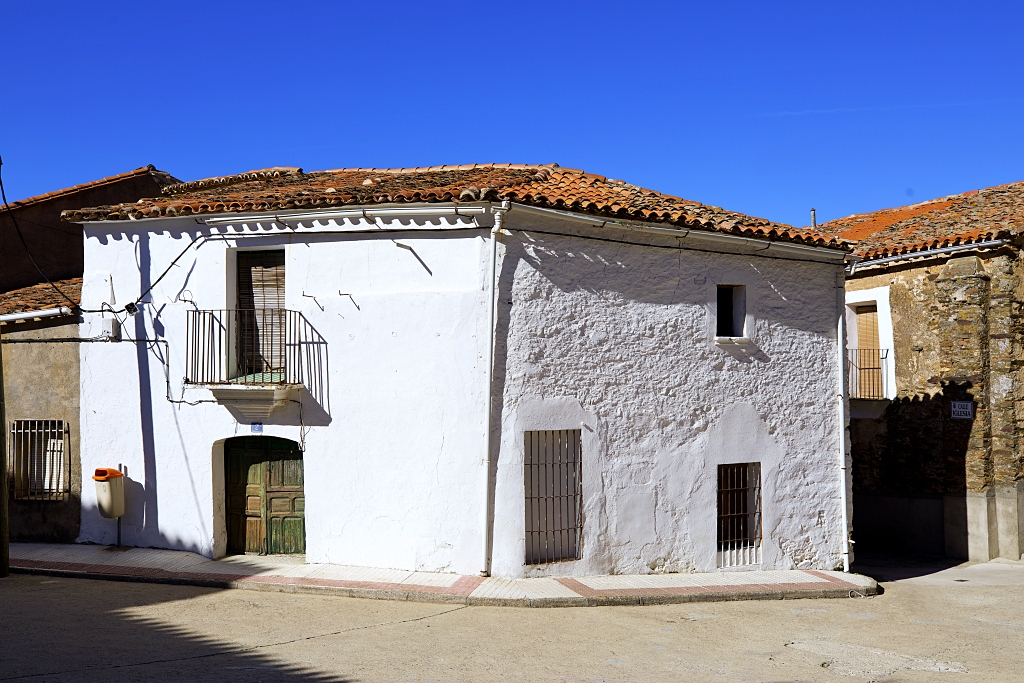
The original north-facing hamlet is located on a hill which leads up to the gate at the foot of the castle. The many faces of Mirabel sit side by side: the majestic buildings with their heraldries which tell the stories of their original owners’ noble lineages, such as the Palace, the old hospital, the town hall and the church; the oldest part of the village with its narrow, winding streets displaying traditional houses and lastly, the newer houses built in the area around the train station.
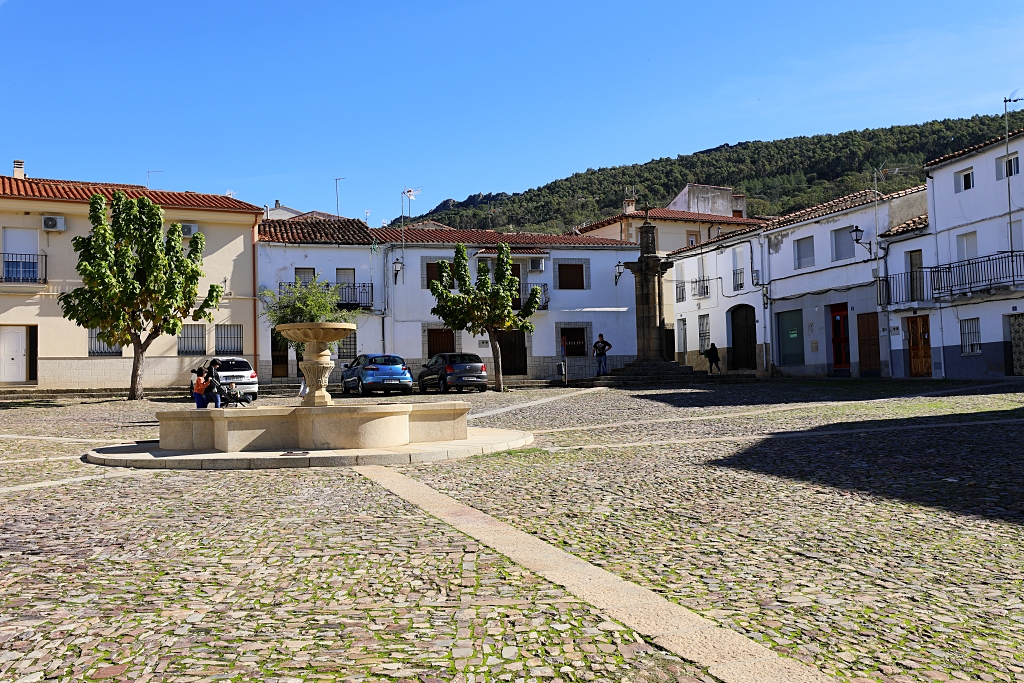
Although the village has been extensively modernised, Mirabel still surprises visitors with its spacious, stone-paved square. With its 16th century stone pillory, the square is an ideal starting point for a walk through the streets of the village.
This is a village to be discovered, with beautiful examples of traditional architecture in its streets and small squares, where many stone, wooden and iron features display the history of this village and its people.

Mirabel’s surroundings are a mosaic of distinct environments, making it worthy of inclusion in the Monfragüe Biosphere Reserve. Rolling hills of dehesa to the north mix with olive groves to surround the village. And to the south the Sierra de los Canchos rises, so called for the canchos or huge rocks which emerge at the peak from the many shades of green of the slopes.
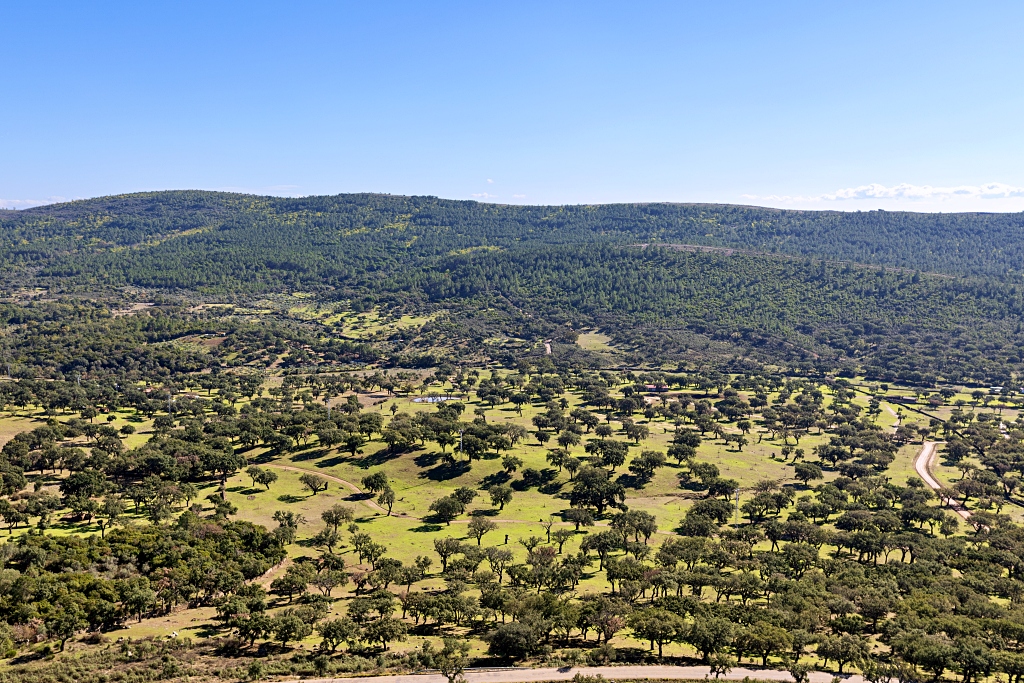
Behind the Sierra de los Canchos, past the gate to the castle there is a wide valley with rolling mounds, an area of common land used for cattle grazing. This area is bound by the Rivera del Castaño at the foot of the Sierra de Santa Catalina, where the Arroyo Barbechoso flows. The Sierra de Santa Catalina forms a varied, exuberant green wall which separates us from the Río Tajo and the Cáceres plain.
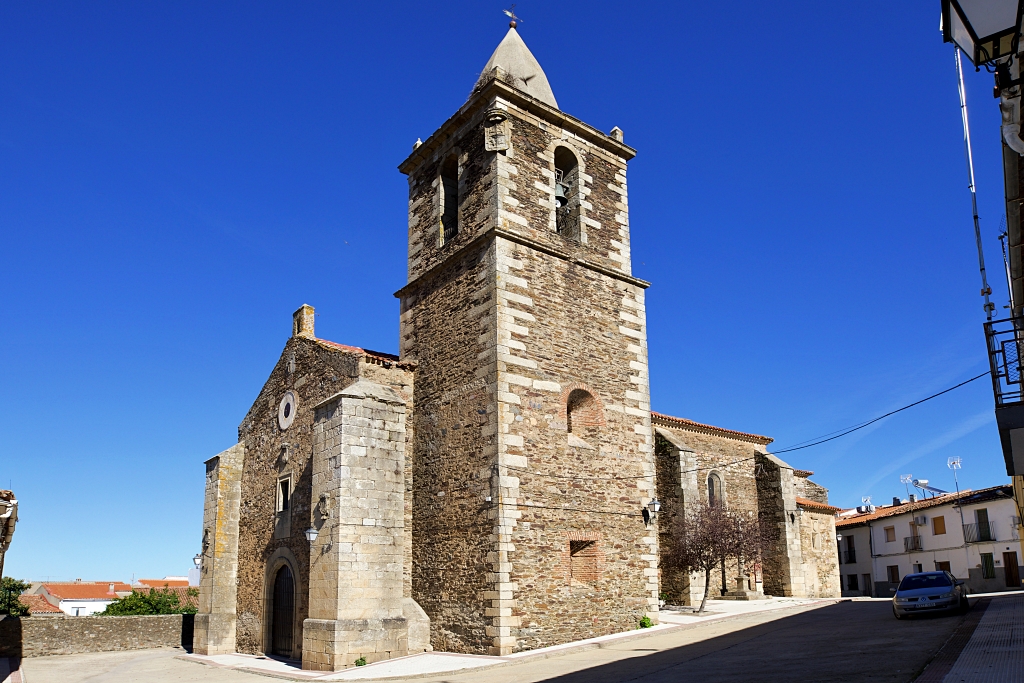
Mirabel has a variety of interesting sights to see, including the Church of Our Lady of the Assumption, the castle, the pillory, the palace, the old hospital and la Charca (a stone pond). The highlights of its surroundings are the Sierra de losCanchos, the Umbría de Barbechoso, the common land of the dehesa, and two listed trees, cork oaks called Padre Santo (Holy Father) and Grueso (stocky).
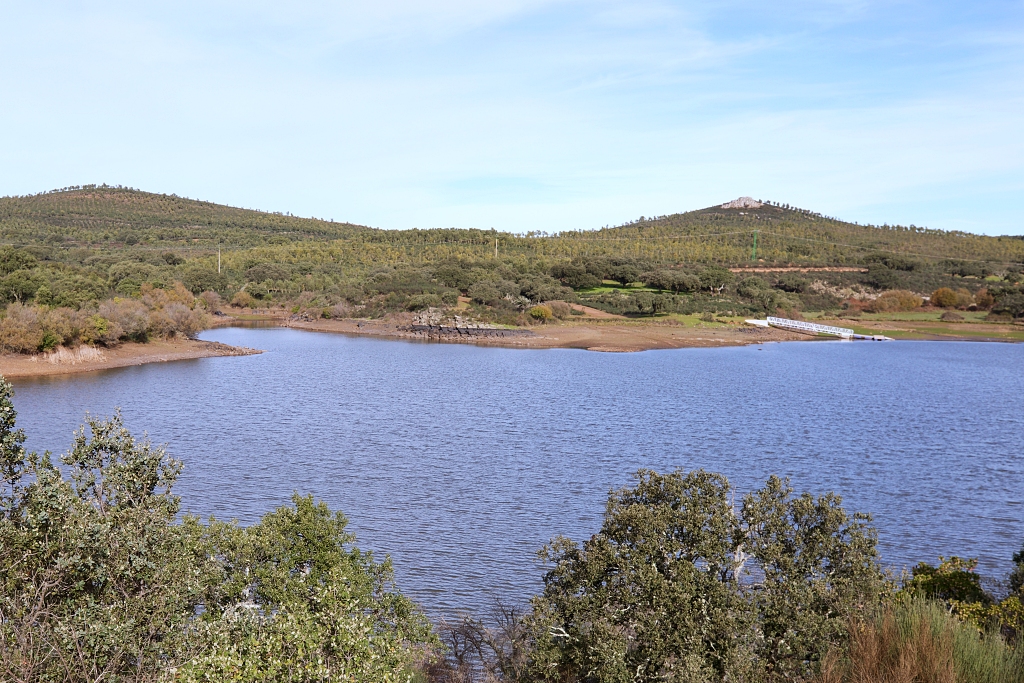
Also of interest for water-sports lovers is the Ribera Castaño reservoir with its pier which facilitates the practice of many water sports.
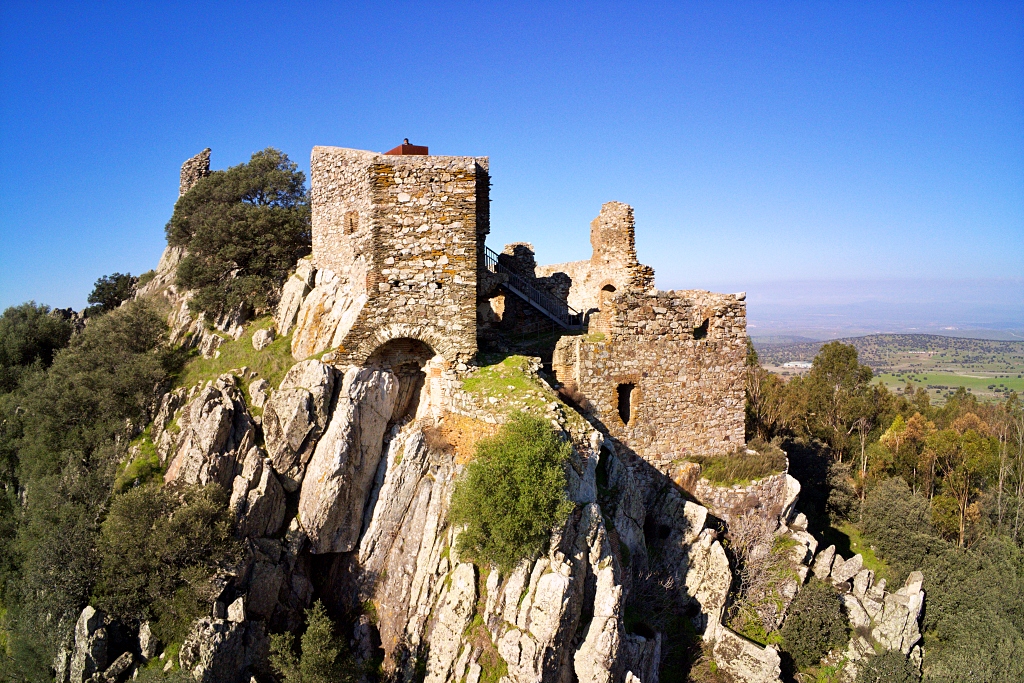
A visit to the castle is worthy of a special mention, with its accessible natural viewpoint from which we can enjoy not just spectacular, scenic views of the surrounding area, but also sightings of the many birds of prey which grace the skies of Mirabel.